


Powdery mildew is one of the most frustrating problems cannabis growers face. It can show up suddenly, spread fast, and ruin weeks or months of work if it isn’t handled early. The good news is that powdery mildew is manageable. With the right growing conditions and a quick response, it’s possible to stop an outbreak and reduce the risk of it coming back.
What Is Powdery Mildew?
It’s a fungal disease caused by several species of fungi that thrive on living plant tissue. In cannabis, it usually appears as a white or light gray powder on leaves, stems, and sometimes flowers.
Early signs include:
- White, dusty spots on leaves
- Leaves curling upward or twisting
- Slower growth and reduced vigor
As the infection progresses, the fungus feeds on the plant’s surface cells, weakening the plant and interfering with photosynthesis. If left untreated, powdery mildew can severely reduce yields, damage buds, and in extreme cases, kill the plant altogether.
One of the reasons powdery mildew is so persistent is that its spores are highly resilient. They can survive on surfaces, tools, and in grow spaces for long periods, waiting for the right conditions to return.
What Causes Powdery Mildew in Cannabis?
Powdery mildew doesn’t appear randomly. It usually develops when plant health and environmental conditions fall out of balance.
Environmental factors
The most common triggers are:
- High humidity
- Poor airflow or stagnant air
- Warm temperatures combined with moisture
- Crowded plant canopies
When air doesn’t move properly around leaves, pockets of humid air form. These microclimates create the ideal conditions for the fungus spores to germinate and spread.
Nutrient imbalances
Plant nutrition also plays a major role in disease resistance. Cannabis plants with weakened structural tissue are more vulnerable to fungal infections.
Common issues include:
- Low calcium (Ca) and silicon (Si), which are important for strong cell walls
- Excess nitrogen (N) can produce soft, lush growth that fungi can colonize more easily
A healthy feeding program helps plants defend themselves naturally against pathogens like powdery mildew.
How to Treat Powdery Mildew
If you spot powdery mildew, acting quickly is critical. The goal is to reduce existing spores and make the environment less welcoming for the fungus.
1. Clean affected areas
Light infections can sometimes be managed by wiping affected leaves with clean cloths or paper towels dipped in water adjusted to a high pH (around 8.0–8.2). A higher pH temporarily disrupts the fungus’s ability to survive on leaf surfaces. Dispose of all used materials immediately to prevent the spread of spores.
2. Prune damaged foliage
Remove heavily infected, yellowing, or dying leaves using clean, sterilized pruning tools. This helps prevent further spread and allows the plant to focus energy on healthy growth. Never leave infected plant material in the grow space.
3. Avoid transplanting
Transplanting an infected plant can spread spores to new soil and nearby plants. Instead, top the soil with fresh compost or clean growing medium to reduce splash-back when watering.
4. Apply a suitable treatment
Organic options such as neem oil, potassium bicarbonate solutions, or plant-based fungicides can help control mildew when used correctly. Avoid spraying buds, especially late in flowering, and always follow product instructions carefully.
How to Prevent Powdery Mildew in Future Grows
Prevention is far easier than treatment. Most mildew problems can be avoided by maintaining stable, well-controlled conditions.
Control humidity
Using a hygrometer, aim for these general ranges:
- Seedlings: 65–80%
- Vegetative stage: 60–70%
- Flowering stage: 40–55%
- Final weeks before harvest: 35–45%
Improve airflow
Good air circulation prevents moisture from settling on leaves. Use oscillating fans and proper ventilation to keep air moving across and through the canopy.
Space plants properly
Avoid overcrowding. Leaves touching each other trap humidity and make it easy for spores to spread from plant to plant.
Maintain plant health
Balanced nutrition strengthens plant defenses. Avoid overfeeding nitrogen and ensure adequate calcium and micronutrient availability.
Powdery mildew usually appears when multiple stress factors combine, not from a single mistake.
Other Cannabis Molds to Watch Out For
Powdery mildew isn’t the only fungal threat cannabis growers face.
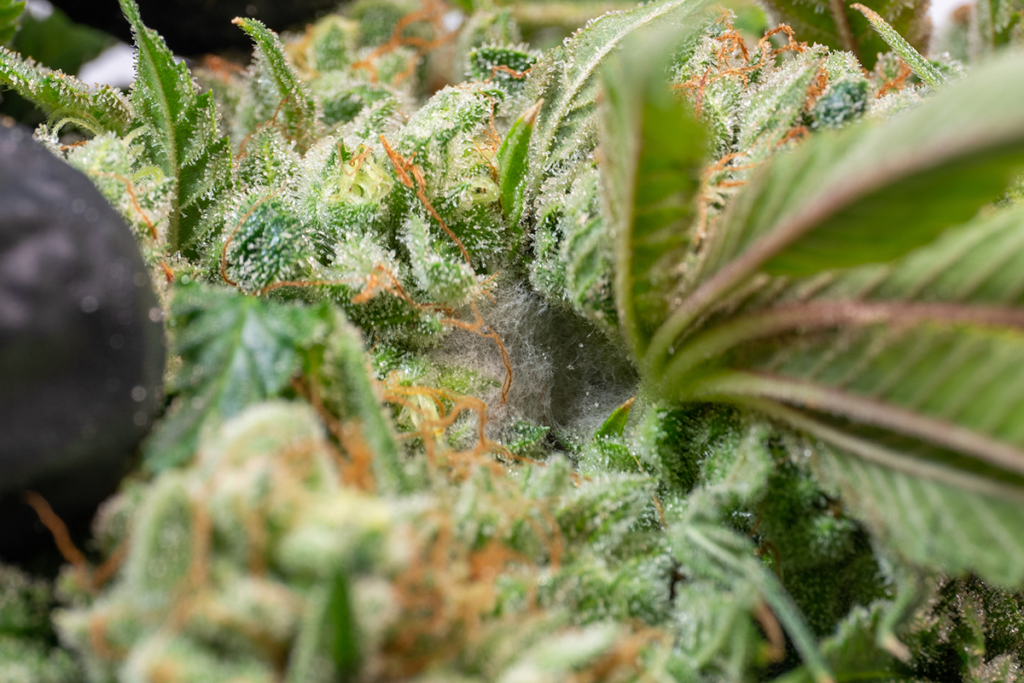
Bud rot (Botrytis)
Bud rot develops inside dense flowers and often goes unnoticed until damage is advanced. Keeping humidity below 50% during flowering and maintaining airflow is key to prevention.
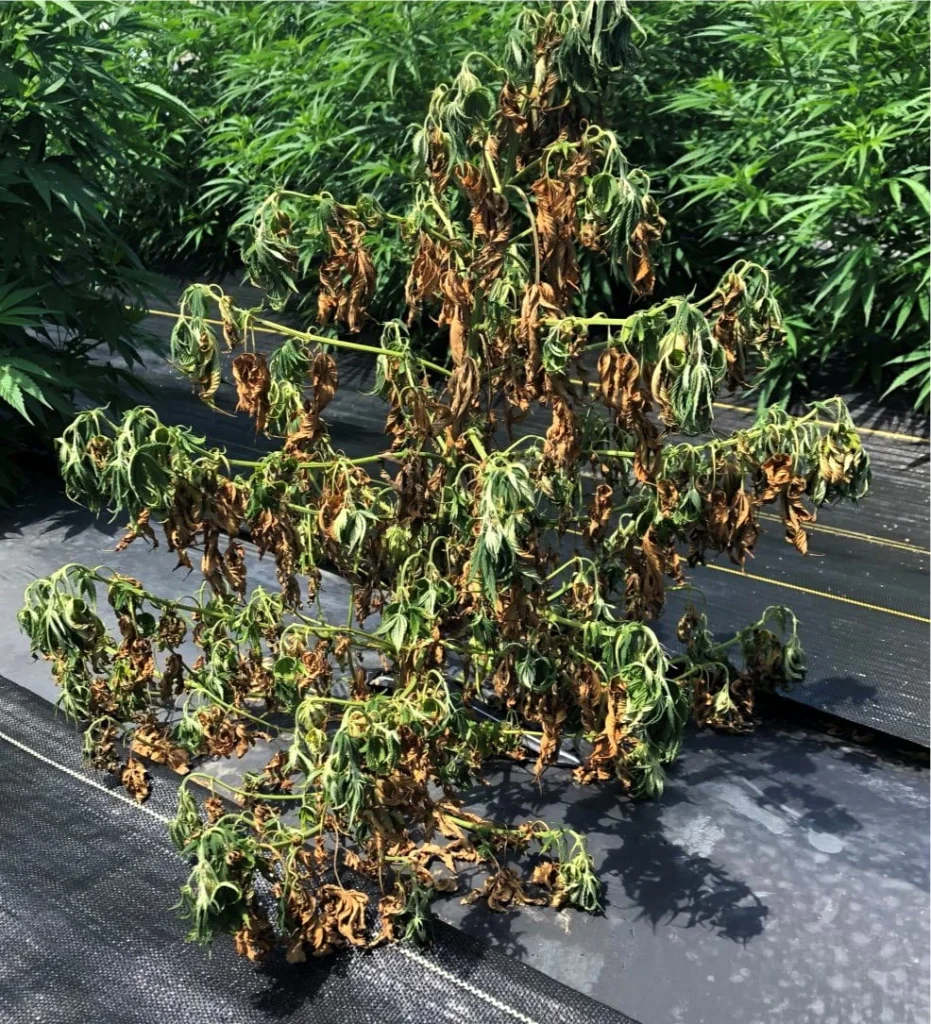
Fusarium
This soil-borne fungus attacks roots and vascular tissue, leading to wilting and plant death. Once present, affected plants must be removed, and contaminated soil should not be reused for several years.
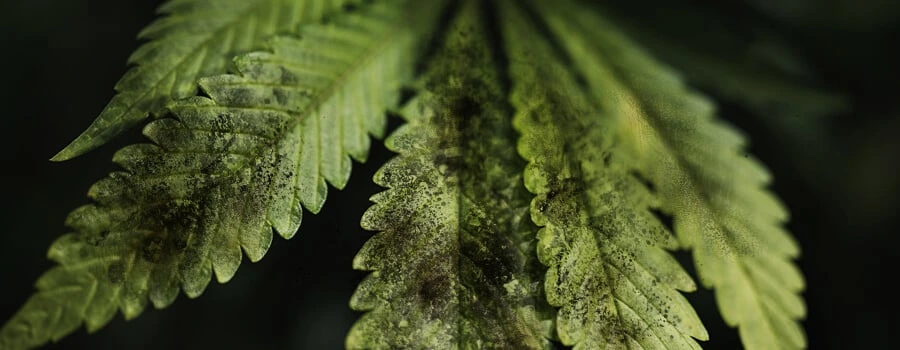
Sooty molds
These molds grow on the sugary residues left by pests such as aphids. While they don’t directly infect plant tissue, they block light and reduce photosynthesis.
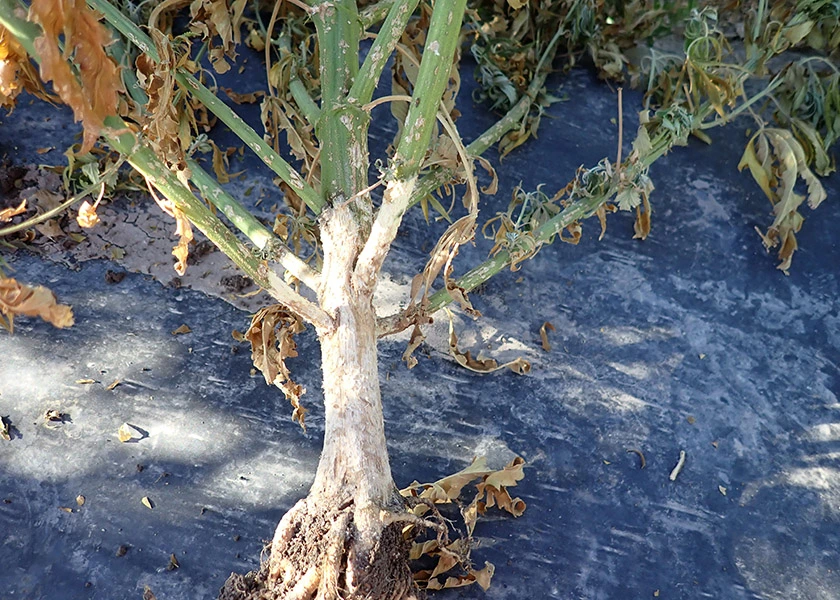
Pythium (root rot)
Often caused by overwatering, Pythium attacks roots and young seedlings. Ensure the soil fully dries between watering, as this helps prevent it.
Final Thoughts
Powdery mildew is a common challenge in cannabis cultivation, but it’s rarely unbeatable. Understanding why it appears, spotting it early, and creating a balanced grow environment can make a significant difference. Healthy plants, good airflow, and controlled humidity remain the most effective tools growers have to keep fungal problems under control.